Pricing a windshield replacement should be straightforward. You see a quoted price, you pay that price, and you drive away with clear glass and a clear conscience. Reality rarely behaves that neatly. Taxes, shop fees, calibrations, disposal charges, mobile service surcharges, and insurance wrinkles often turn a simple auto glass quote into a puzzle. I’ve spent years quoting, billing, and explaining those line items at the counter and on driveways. The goal here is to strip away the fog so you know exactly what each charge means, what you can question, and where you can save without sacrificing safety.
If you are anywhere near 27420 or surrounding ZIPs, the mechanics of taxes and fees will be familiar, but the mix can change by municipality, vehicle, and job type. The principles in this guide apply just as well if you search for 27420 Auto Glass on your phone at a gas station, or if you’re comparing an auto glass quote 27420 from an Auto Glass Shop near 27420 with a national call center’s estimate. We’ll break down how shops arrive at the final number, where the shop has discretion, and how to spot red flags before you hand over your keys.
Why the number you saw online rarely matches your invoice
Auto glass quotes start with glass cost and labor, then layer in taxes and fees tied to local rules and the specifics of your car. The difference between an online teaser and a final invoice usually comes from four buckets. First, vehicle complexity, including windshield options like rain sensors, lane departure cameras, acoustic interlayers, or heated wiper park areas. Second, calibration requirements after glass replacement, which apply to many late model vehicles equipped with forward-facing cameras. Third, compliance and disposal costs, because old glass and adhesives have to be handled and hauled properly. Fourth, tax treatment that depends on whether the sale is parts only, labor only, or both, and whether the shop is doing mobile service to your driveway in a different jurisdiction.
I’ve seen a 2014 sedan with a plain windshield come in at 275 parts and 125 labor, then a 2019 crossover with seemingly the same piece of glass land near 750 because the camera needed a static calibration and the glass was only available in OEM. Neither customer was being upsold. The parts catalogs and safety systems dictated the difference.
What taxes you actually pay on auto glass
Most states tax tangible goods, including glass, and many tax the related labor if the labor is part of installing that taxable item. Where things get messy is mobile work versus in-shop work, and which local jurisdiction applies when you live in one ZIP and your installer is registered in another. In and around 27420, you will usually see sales tax calculated on parts and shop supplies, and sometimes on labor depending on how the shop reports. The tax line should map to the subtotal that is taxable. If the shop taxes a calibration performed by a third party or taxes non-taxable disposal fees, ask for a breakdown. Good shops will show the taxable base and the rate.
Shop owners don’t love being tax cops. We follow state guidance, update point-of-sale software, and collect the tax so you don’t get a surprise audit later. If a shop refuses to itemize tax or claims it’s illegal to show line items, that’s not standard practice for the region. You should be able to see what part of your invoice the tax is applied to and at what rate. If you’re comparing quotes in nearby ZIPs like 27401, 27402, 27403, 27404, 27405, or 27406, expect tiny swings if different local rates or taxable bases apply. Quotes labeled 27401 Auto Glass or auto glass quote 27401 may present taxes that differ slightly from an auto glass quote 27405 even if the base glass price matches. The difference comes from jurisdiction rules, not from the tech in the van.
Fees that raise eyebrows, and which ones are justified
Let’s decode the most common charges you’ll see on an auto glass quote 27420 and neighboring ZIPs like 27407, 27408, 27409, 27410, and 27411.
Environmental or disposal fee. This pays for lawful disposal of your broken glass, old urethane, primers, and sometimes packaging. It’s not huge, usually 5 to 25 dollars. It should not scale with vehicle value. If you see a disposal fee that looks like a percentage of the job, ask for an explanation.
Adhesive or materials fee. Modern urethane systems are expensive, and good shops don’t skimp because bond strength and cure time are safety critical. A materials fee in the 20 to 45 dollar range is common for a single windshield, higher for vans or if primers and pinch weld prep are extensive. This fee should reflect actual consumables: urethane tube, primer, tape, gloves, razor blades, and cleaners.
Mobile service fee. Some shops build the travel cost into labor. Others itemize a mobile fee, often 20 to 60 dollars in-town. If your driveway is 40 miles from the shop, expect a higher number or a mileage charge. You can often avoid this by going to an Auto Glass Shop near 27420 if you’re within their service perimeter. Many shops waive the mobile fee for same-day routes or for locations near arterial roads in 27412, 27413, or 27415.
Calibration fee. If your windshield replacement affects Advanced Driver Assistance Systems, the camera needs to be calibrated. There are two main types. Static calibration uses targets and a level bay, usually in-shop. Dynamic calibration requires a road drive under set conditions. Fees range widely, roughly 125 to 400 for single camera systems. Some vehicles require both static and dynamic. If your quote in 27416, 27417, or 27419 includes calibration and another shop’s quote doesn’t, you’re not comparing apples. Ask each shop to specify whether calibration is included, which method they will use, and if they subcontract it.
Molding or clip charge. Many windshields rely on exterior moldings, rain channels, or clips that must be replaced. Reusing hardened or deformed moldings creates wind noise and leaks. Expect 10 to 90 for moldings, depending on the vehicle. Luxury and European brands can run higher for OE parts.
Glass disposal surcharges for tempered pieces. Back glass and door glass are tempered and shatter into beads that spread everywhere. Clean-up and disposal take longer. If your quote for 27425 Auto Glass or 27427 Windshield Replacement involves tempered glass, a small surcharge is normal.
Fuel or surcharge line during volatile periods. During spikes in fuel costs, some mobile-heavy shops add a temporary fuel surcharge. I’m not a fan of this line because it feels vague. If you see it, ask how long it’s been in effect and whether an in-shop appointment avoids it. Many shops in 27429, 27435, 27438, and 27455 will drop that line if you come to them.
Where shops have control, and where they don’t
Parts cost is mostly market driven. A dealer OEM windshield may cost the shop 300 to 1,200 depending on brand. Aftermarket options can cut that by 20 to 50 percent, though optics, acoustic layers, and sensor brackets can vary. Some vehicles are picky. Hondas, Subarus, and some German cars frequently behave better with OE glass when it comes to camera calibration and lane keeping smoothness. Shops can choose suppliers, but if a camera won’t calibrate on a cheaper lite, they eat time and risk. That’s why your quote might specify OEM only for a 2020 model and offer aftermarket for a 2012.
Labor is a blend of book time and technician experience. Removing cowl panels, dealing with rusted pinch welds, or fighting bonded moldings adds minutes. Flat-rate schedules help, but we’ve all had a 45 minute job turn into two hours because the last installer cut a corner with cold knife technique. Good shops build in enough time so the tech can prep the channel, prime properly, and set the glass cleanly. If a shop’s labor feels low by 30 to 40 percent, ask how they handle rust or failed clips. The cheapest installer often recovers that discount in callbacks.
Taxes follow the law. If one shop’s quote taxes labor and another doesn’t across 27495, 27497, 27498, and 27499, you’re going to see variances. Be cautious if a shop promises no tax at all unless it’s a true warranty or insurance-covered claim with specific rules. Sales tax isn’t optional just because glass is clear.
Fees are where shops signal their philosophy. You want transparency, consistency, and a willingness to reduce or waive a charge when it’s not relevant. For instance, no mobile fee if you tow the car in. No disposal fee if you’re only getting a rock chip repair. A materials fee only on jobs that use adhesive systems, not on a simple weatherstrip reseat.
Understanding calibration without the mystique
Calibration earns its own section because it carries cost and safety weight. If your car uses a camera at the top of the windshield for lane keeping or braking assist, replacing the glass changes the camera’s position by millimeters. The system needs to relearn its view. Static calibration requires targets placed at precise distances in a level environment. Dynamic calibration uses a controlled drive at a set speed on a road with clear lane lines.
Shops in the 27420 region handle calibration in three ways. Some have in-house equipment and a flat bay. Some partner with a mobile calibration company that comes to the shop. Others send the car to a dealer. You should know which applies before you book. In-house calibration means faster turnover and often lower pricing. Third-party calibration adds a scheduling hop but is common. Dealer calibration is sometimes required, particularly for vehicles with proprietary targets or complex multi-camera systems.
What can go wrong? If the glass bracket is slightly off, or the windshield’s optical quality distorts the image, calibration can fail. I’ve had to swap an aftermarket windshield for an OEM unit on a Subaru because the dynamic calibration wouldn’t complete. Time lost, yes, but the correct choice. When comparing an auto glass quote 27420 with one from 27410 Auto Glass or 27411 Windshield Replacement, ask whether they have a plan if calibration fails on the selected glass. You want a shop that owns the outcome, not one that hands you the keys and says, good luck with the dashboard lights.
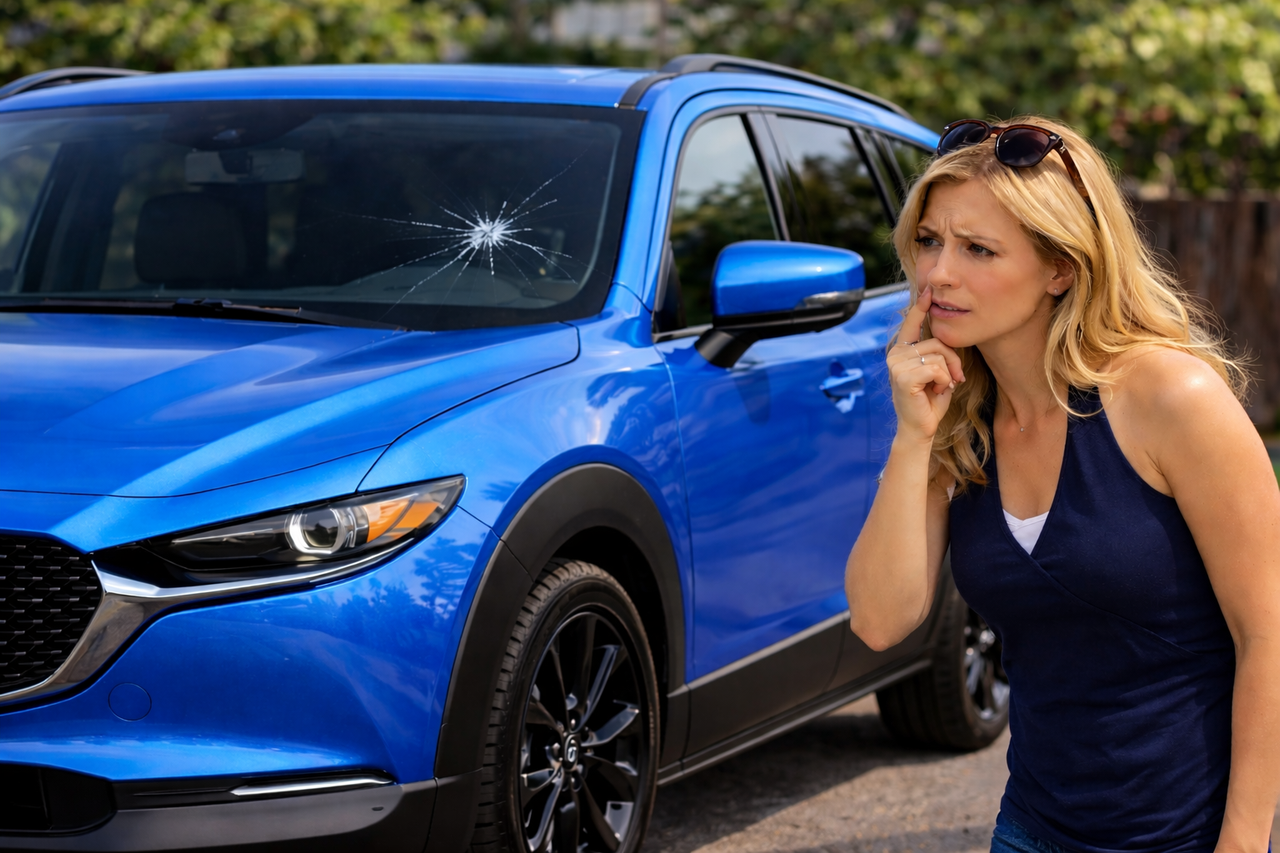
How insurance changes the math
If you’re filing through insurance, your out-of-pocket may be only the deductible. Comprehensive coverage often covers glass with no deductible in some policies, but you have to check. Networks steer claims to preferred shops, and those shops agree to pricing matrices. That means the menu of fees looks different. Disposal and materials are rolled into a network-approved rate. Calibrations require documentation. Taxes are calculated by the network platform based on your garage address.
You still have a choice of shop, even if you see a steering attempt. An Auto Glass Shop near 27420 that is not in the network can still complete the work, but you may pay the difference between their invoice and the network’s allowed amount. If you’re in 27401, 27402, or 27403 and the preferred shop can’t schedule you for a week, it’s reasonable to ask your carrier to approve an independent shop at market pricing for safety reasons. Insurers will often agree if you present a written estimate and calibration requirement.
One more insurance quirk: some carriers require separate authorization for ADAS calibration even when it’s obviously necessary. That can delay the job. Ask your shop to initiate that pre-approval when they set the appointment so you’re not stuck with a driveable but malfunctioning car.
The anatomy of a clean, honest quote
A quote worth trusting reads like a clear story. It names the glass part with qualifiers that affect price, like rain sensor, heads-up display, heated, or acoustic. It lists labor as a flat figure or book hours with a rate. It identifies calibration, method, and price. It shows materials or adhesive fees. It notes moldings or clips if applicable. It includes a mobile service line only if you’ve requested mobile. It gives a disposal amount that looks like a small, fixed dollar figure. Finally, it shows taxes and the taxable base.
When you request an auto glass quote 27420 or in nearby ZIPs like 27404, 27405, 27406, 27407, 27408, or 27409, don’t settle for a single grand total texted to you without context. Ask for the line items. You’re not being difficult; you’re protecting your wallet and your windshield.
Here’s a quick way to pressure test a quote in under two minutes:
- Confirm the exact glass features matched to your VIN, including camera, rain sensor, HUD, and heating elements. Ask whether calibration is required, which type, and whether it’s included. Request disclosure of adhesive brand and cure time so you can plan safe drive-away. Clarify mobile versus in-shop, and whether any mobile or fuel surcharge applies. Ask for the taxable subtotal and the tax rate used to compute the tax line.
That checklist saves you from the two worst surprises, calibration upcharges and tax confusion, and it keeps both parties aligned on parts and timing.
Regional nuances across nearby ZIPs
Within a few miles, the auto glass landscape can change. Warehouse proximity dictates part availability. Some shops in 27415 or 27416 have better access to dealer parts before noon, which means same-day OEM is possible while a shop farther out waits until the next morning. Municipal tax rates can vary by tenths of a percent. Parking and bay space dictate whether static calibration is feasible on-site or must be sublet.
If you’re weighing quotes from 27417, 27419, 27425, or 27427, expect small differences that trace back to these logistical realities. An Auto Glass Shop near 27429 that sits next to a distributor might beat another shop by 40 on the same aftermarket windshield simply because freight is lower. Meanwhile, a shop in 27435 that invested in an alignment-grade static calibration bay may charge 30 more for the calibration but deliver the car an hour faster. That’s a fair trade if your time matters.
The same applies across 27438, 27455, 27495, 27497, 27498, and 27499. Don’t chase the absolute lowest price when the quote lacks calibration or uses vague language like camera ready glass without stating whether the camera will be calibrated. A precise quote is often the better value even if the sticker is higher by 8 to 12 percent.
When fees signal trouble
Some line items deserve skepticism. Administrative fee is one. This sounds like padding unless it pays for a specific, optional service like insurance claim filing on your behalf. Hazard fee or shop supplies exceeding 10 percent of labor is another. That ratio belongs in collision repair, not glass replacement. Pandemic cleaning fee has largely disappeared. If you still see it, question it.
Another flag is a fee that scales with the car’s value, like premium vehicle surcharge. Installing glass on an S class may take more care, but the materials and calibration outline should capture that. A floating surcharge feels like a tax on taste, not a reflection of cost. Finally, watch for multiple small fees that duplicate one another: disposal fee plus environmental fee plus recycling fee. It’s reasonable to combine those costs into a single, modest disposal line.
Timing, cure time, and why speed sometimes costs more
You’ll see rush or same-day fees when scheduling is tight. Before agreeing, ask about safe drive-away time. High modulus urethanes that meet OEM strength standards typically reach safe drive-away in 30 minutes to a few hours depending on temperature and humidity. If a shop promises a 15 minute turnaround at noon on a cold day in January, something is off. Good technicians respect cure times. In warm weather around 27420, drive-away can be genuinely quick with the right adhesive, but it still takes time to prep the pinch weld and clean set the glass.
If you need the car back immediately for work or school pickup, plan for an early morning appointment and mention your window. The shop can select an adhesive system that meets your timeline and note it on the quote. That avoids the temptation to shortcut surface prep, a mistake that leads to squeaks and leaks weeks later.
How to compare OEM and aftermarket without emotion
Brand loyalty runs deep, and glass is no exception. OEM glass assures bracket tolerances and optical quality that align with the vehicle’s camera system. Aftermarket glass has improved dramatically, but there are still misses. For vehicles from early ADAS generations, like 2015 to 2017 models, OEM tends to provide smoother calibrations. Newer aftermarket offerings often meet the mark, especially from premium aftermarket brands.
Ask your shop whether they have had calibration success with your specific model on a particular aftermarket brand. A straight answer beats a slogan. If they recommend OEM for a 27410 Windshield Replacement on a 2021 model with complex HUD, it’s probably based on prior experience, not profit. If they push aftermarket on a 2012 model without cameras, that’s sensible. Your quote should show the part brand or at least note OEM versus aftermarket. Treat a vague glass brand line as a reason to ask for clarity before you approve the work.
The quiet costs that good shops eat
A well-run Auto Glass Shop near 27420 absorbs several invisible costs. Technician training on new ADAS procedures. Annual calibration equipment validation. Waste stream compliance so those urethane tubes don’t end up in the wrong bin. Insurance for mobile service, especially when technicians work on public streets. Fitment research using your VIN to avoid the wrong glass showing up at your curb. None of these appear as line items, nor should they. They live inside the labor rate and the professionalism you’re buying.
When a quote is 80 dollars higher than another, don’t just look at the last line. Ask yourself which shop seems to be investing in the stuff that keeps you safe and avoids second visits. A slightly higher labor figure that reflects training and care will be cheaper over the life of the glass.
A straightforward path to a fair invoice
Here’s how I advise family and friends in 27420 who want clean numbers and no surprises.
- Send the shop your VIN and photos of the upper windshield area and any sensors on the glass. Ask for a written quote with line items for glass, labor, calibration, moldings, materials, disposal, mobile fee if needed, and tax with the taxable base shown. Confirm the adhesive brand and safe drive-away time in writing. Decide whether you want OEM or a named aftermarket brand based on the shop’s calibration experience with your model. If using insurance, have the shop initiate calibration pre-approval while scheduling.
That path treats the quote as a shared plan rather than a guess. It also gives you leverage. If the invoice departs from the quote, you can ask why before you tap your card.
Local examples that make the math concrete
A small sedan in 27420 without ADAS. Aftermarket windshield at 245, labor 140, materials 28, disposal 12, tax applied to parts and materials at Greensboro auto glass repair the local rate, total under 475. No mobile fee because you went to the shop. This is the clean, simple case.
A compact SUV in 27408 with forward camera and heated wiper park. OEM windshield 520, molding 35, labor 175, static calibration 180, materials 32, disposal 12, tax on parts and materials, total around 980. The calibration is the swing item. If the shop can perform dynamic calibration instead and your roads cooperate, the fee might be 140 to 160.
A late model luxury sedan in 27411 with HUD and acoustic interlayer. OEM only. Glass 880, labor 220, static plus dynamic calibration 320, materials 38, disposal 12, tax on parts and materials, potential mobile fee 40 if you insist on driveway service because the shop’s static calibration bay is in-house. Total in the 1,500 range. If a competitor offers 1,050 with no calibration listed, that’s a red flag, not a bargain.
A back glass in 27407 after a parking lot break-in. Tempered glass 210 aftermarket, labor 160 because of interior trim removal, materials minimal, disposal 18 due to tempered cleanup, no calibration. Tax on parts. Total in the 440 to 500 range. Compare that with a door glass in 27409 which often runs similar on parts but less labor if the regulator is intact.
These are not universal prices, but the structure holds. You can plug in your numbers and see which levers matter for your car.
Final thoughts for a clear, fair transaction
A good auto glass quote doesn’t hide the ball. It shows what you’re buying, why you need it, and how tax and fees apply without puffery. If you’re shopping across 27401, 27402, 27403, 27404, 27405, 27406, 27407, 27408, 27409, 27410, 27411, 27412, 27413, 27415, 27416, 27417, 27419, and 27420, focus on clarity and capability. Ask about calibration plans. Confirm adhesive and cure time. Expect a modest, fixed disposal fee and a rational materials charge. Insist on seeing the taxable base for the tax line.
You don’t need to be an expert in urethane chemistry or ADAS target placement to get this right. You just need a shop that respects your intelligence and treats the quote like a contract. When that happens, the only surprise you’ll have is how much quieter and tighter your car feels with fresh glass properly bonded to the frame. That’s the kind of surprise worth paying for, and the kind that keeps you out of the weeds with hidden taxes and junk fees.